New Memory Tech Promises Devices That Run Months Between Charges
May 9, 2026 - 05:18

A team of researchers has developed a tiny memory device that actually works better as it shrinks, overturning a long-standing barrier in electronics design. The breakthrough could eventually let smartphones, laptops, and wearables run for months on a single charge.
Conventional memory chips lose performance and efficiency when scaled down to the smallest sizes. This new technology, based on a novel material structure, does the opposite. As the device gets smaller, its energy consumption drops and its speed increases. That is a reversal of the usual trade-off where miniaturization comes at the cost of higher power draw.
The researchers built the memory using a thin film of a special oxide material that switches between resistive states to store data. Unlike standard flash memory, which requires a constant trickle of power to retain information, this design holds data without any electricity. That alone cuts standby power use nearly to zero.
In tests, the prototype consumed roughly one-hundredth the energy of existing memory chips while operating faster. The team says the approach is compatible with current semiconductor manufacturing, meaning it could be scaled up for commercial production without expensive retooling.
If adopted widely, the impact on battery life would be dramatic. A phone that now lasts a day could stretch to weeks. A smartwatch that needs nightly charging could go for months. The technology also generates less heat, which could allow thinner devices without cooling fans.
The work was published in a peer-reviewed journal and has drawn interest from several chipmakers. The researchers caution that commercial products are still years away, but they are confident the fundamental physics works. For now, the prototype proves that shrinking a memory chip does not have to mean sacrificing efficiency.
MORE NEWS
July 22, 2026 - 03:34
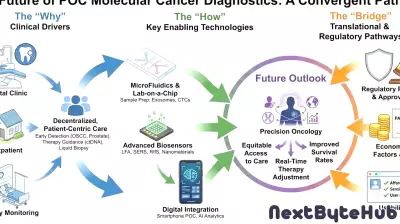
Paradigm shift in oncology: The emergence of point-of-care diagnostic technologyThe dream of getting cancer test results faster, more accurately, and at a lower cost is moving closer to reality. This shift is being driven by interdisciplinary teams who are rethinking how...

July 21, 2026 - 00:13
Cheaper AI models create more demand for technology, expert arguesThe rise of more affordable artificial intelligence models is not slowing down the technology sector but instead creating a wave of new demand, according to a market expert. Eric Jackson, founder...

July 20, 2026 - 06:30
Eva Live Announces LOI to Acquire Airbeam Wireless Technologies to Advance AI-Powered Autonomous and Millimeter-Wave CommunicationsEva Live Inc. has signed a Letter of Intent to purchase a 51% interest in Airbeam Wireless Technologies Inc., a deal valued at roughly $16 million. The acquisition is aimed at strengthening Eva...

July 19, 2026 - 19:12
The supercars and super sports cars utilizing electric power, hybrid technology, as well as gasolineThe roar of a V12 engine is not disappearing, but it is increasingly sharing the stage with the silent hum of electric motors. In recent years, the supercar world has undergone a major shift,...