What Is the Role of Fiber Optics in Modern Data Centers?
3 January 2026
Let’s face it—our world is running on data. From scrolling through Instagram to managing cloud-based operations in a Fortune 500 company, data is what keeps everything ticking. But have you ever stopped to wonder how your Netflix stream doesn’t buffer (most of the time)? Or how businesses manage to crunch mind-boggling amounts of information in a flash?
Well, welcome to the unseen world of data centers—the digital backbone of the internet. And the real superhero in this story? Fiber optics. Yep, those thin strands of glass or plastic that carry light are doing some heavy lifting, silently fueling our high-speed digital age.
In this article, I’ll walk you through what makes fiber optics so vital in modern data centers. We’ll break down the techy terms, dive into the how’s and why’s, and keep it warm and human all the way. Buckle up!
What Exactly Is Fiber Optics?
Before we get into the meat of it, let’s get the basics down.Fiber optics is a technology that uses strands of glass or plastic to transmit data as pulses of light. That’s right—light! Unlike traditional copper cables that use electricity, fiber optics move data at near light-speed. Sounds futuristic, right? But it’s very real—and it’s already been here, quietly revolutionizing the way we communicate and store data.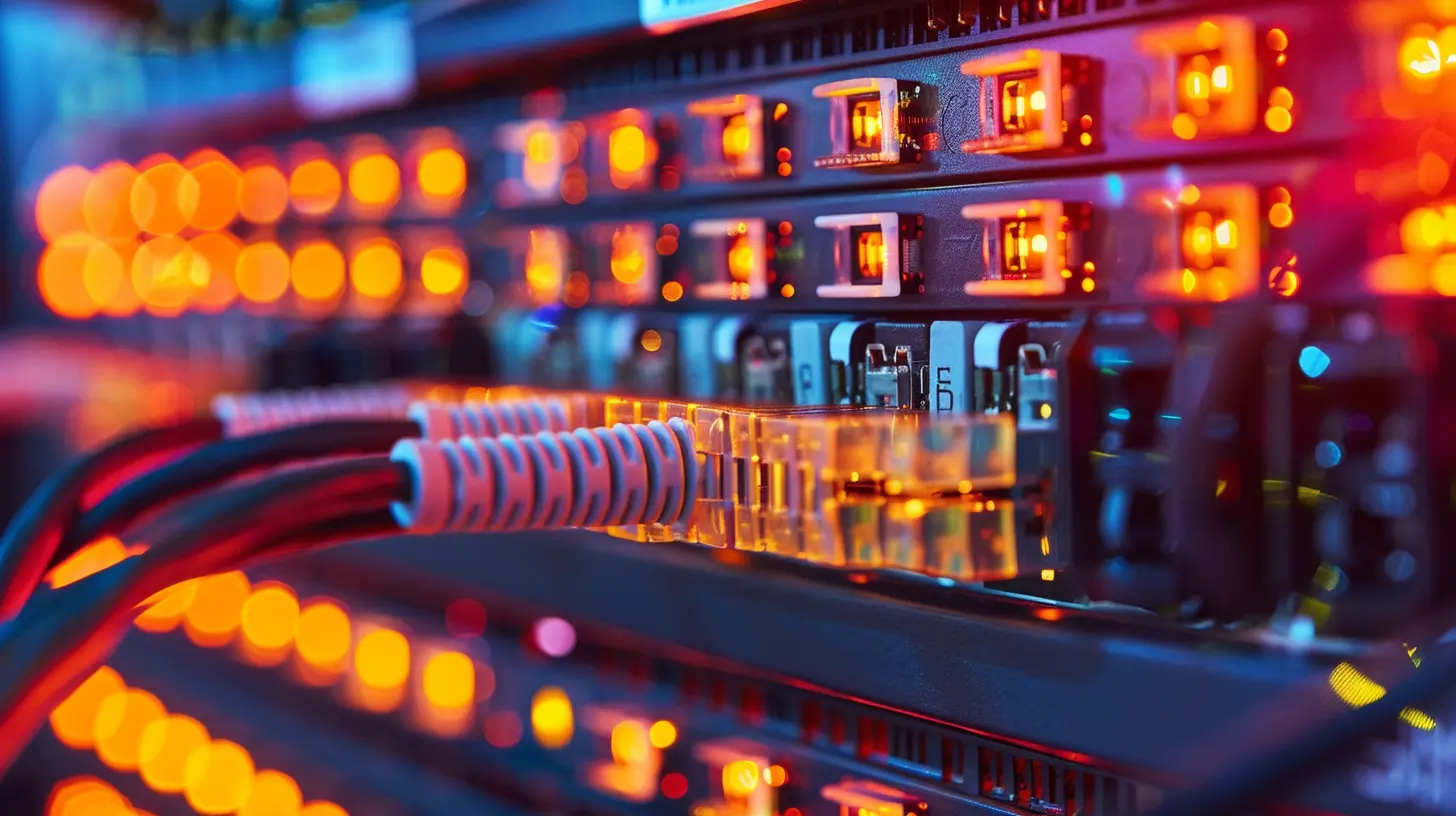
So, Why Do Data Centers Even Matter?
Think of data centers as the “brain” of modern computing. They’re facilities packed with servers, routers, switches, and storage systems—basically all the hardware needed to process, store, and transmit digital information.When you upload a photo, stream a movie, or even open a Google Doc, it’s getting processed through some data center somewhere in the world. These centers make sure that information is available 24/7.
And here’s where fiber optics come in—they’re the lifeline of this digital brain.
The Speed Factor: Fiber Optics Make Data Move Fast
We live in the fast lane when it comes to data, and nobody’s got time for lag or buffering anymore.Fiber optic cables can transmit data at eye-watering speeds—up to 100 Gbps and beyond. This is a game-changer in high-traffic environments like data centers, where milliseconds matter.
Every time a user makes a request—whether it's loading a webpage or retrieving records from the cloud—the response needs to be instantaneous. Fiber optics help ensure that happens. It’s like switching from a garden hose (copper cables) to a fire hydrant (fiber optics).
Handling Heavy Data Loads Without Breaking a Sweat
One of the biggest challenges data centers face? Bandwidth.In a world of streaming 4K videos, real-time analytics, and remote work, data traffic is growing faster than ever. Fiber optics offer a massive bandwidth advantage. They can transmit large volumes of data without losing quality or speed over long distances.
That means more users, more applications, and more IoT devices can work simultaneously—all thanks to fiber's remarkable capacity.
Reliability: Fiber Optics Don’t Flake Out Easily
Have you ever had your Wi-Fi cut out during a Zoom call? Annoying, right?In mission-critical environments like a data center, even a tiny hiccup can lead to outages, dropped communications, or data loss. That’s why fiber optics are a no-brainer. They’re not only fast but also highly reliable.
They’re immune to electrical interference, which often plagues copper cables. Lightning strikes? No problem. Nearby electrical equipment? No biggie. Fiber cables continue doing their job without skipping a beat.
Longevity and Scalability: A Future-Proof Investment
Think of fiber optics as the marathon runners of data transmission. They go the distance, and they last.Fiber cables are known to be incredibly durable—they can last up to 20-25 years with minimal maintenance. And as data centers look ahead to scaling operations and meeting increasing demand, fiber optics offer the flexibility to grow without constantly re-wiring the whole infrastructure.
That’s a long-term win for both performance and cost-efficiency.
Distance? Fiber Laughs at Distance
One of copper’s biggest flaws is signal degradation over distance, especially at higher speeds. That means more repeaters and more electricity.Fiber optics? They can handle tens of kilometers without losing signal quality. This trait is a big deal for sprawling data centers or facilities that need to communicate with others across town—or across continents.
Whether it's a hyperscale data center or an edge facility, fiber optics make long-distance communication seamless.
Security: Fiber Keeps Your Data Under Lock and Key
Here’s where things get a little James Bond.Fiber optics are inherently more secure than copper. Why? Because intercepting data from a fiber cable is extremely difficult. It requires physically tapping into the line, and even then, it’s often detected immediately due to signal disruption.
In an age where cybersecurity is front and center, fiber optics add an extra layer of physical security—making them an appealing choice for industries like finance, healthcare, and government.
Lower Latency = Better Everything
Latency is the villain in most digital experiences. It’s the delay that occurs when data moves from point A to point B.Fiber optics virtually eliminate that villain. With light-speed transmission, they ensure ultra-low latency—crucial for applications like:
- High-frequency trading
- Real-time AI processing
- Streaming and gaming
- Telemedicine
When every microsecond counts, fiber is the go-to tool in the data center toolkit.
Energy Efficiency: Saving Power While Staying Powerful
Let’s talk green.Data centers consume a massive amount of electricity. Cooling systems alone can account for about 40% of their energy use. So, using more efficient cabling like fiber optics is a smart move.
Fiber uses less power to transmit data when compared to copper, which constantly deals with resistance and heat. Over thousands of connections, that energy savings adds up—both for your wallet and the planet.
Supporting Cloud and Edge Computing
The cloud isn’t just a buzzword—it’s the future. And then there’s edge computing—where data is processed closer to its source rather than a central location.Both rely on fast, reliable, and scalable infrastructures. And guess what checks all those boxes? Fiber optics.
As these computing models continue to grow, the need for faster connectivity will outpace older technologies. Fiber optics are perfectly positioned to make it all possible.
Simplifying Data Center Architecture
Fiber also enables simplified network designs. With higher speeds and longer reach, you don’t need as many switches or intermediary devices. That means lower latency, fewer points of failure, and easier management.Think of it like tidying up a messy closet—fewer cables, more space, better performance. Who doesn’t love that?
Challenges of Fiber Optics (Yep, It’s Not All Roses)
I know we’ve been fangirling over fiber a lot, but let’s keep it real. There are a few drawbacks to consider.Installing fiber optics isn't cheap upfront. The cables, connectors, and specialized tools can get pricey. Technicians also need specific training, which adds to costs.
However, when you factor in the long-term savings from fewer outages, lower energy bills, and reduced maintenance—fiber usually wins in the grand scheme of things.
Fiber Optics vs Copper: The Ultimate Showdown
| Feature | Fiber Optics | Copper Cables ||--------------------|----------------------|------------------------|
| Speed | Extremely Fast | Moderate |
| Bandwidth | Very High | Limited |
| Signal Interference| Immune | Susceptible |
| Distance | Long Range | Short Range |
| Security | High | Moderate |
| Cost | Higher (initial) | Lower (initial) |
| Maintenance | Low | Higher |
Fiber wins on nearly every count—especially for future-ready infrastructure.
Final Thoughts: Fiber Optics Are the Heartbeat of Modern Data Centers
If data centers are the brains of the digital world, then fiber optics are the fast and efficient neural highways that make everything function seamlessly.From speed and bandwidth to reliability and energy efficiency, fiber optics are playing a mission-critical role in shaping the future of how we store, access, and process data.
So the next time you're binging a series, video-calling a friend across the globe, or uploading a massive file—just know that some incredibly thin strands of glass are making that magic happen.
Pretty amazing, huh?
all images in this post were generated using AI tools
Category:
Data CentersAuthor:

Reese McQuillan
Discussion
rate this article
2 comments
Ember Wood
This article beautifully highlights how fiber optics are essential for high-speed connectivity in data centers. It's fascinating to see technology evolve and support our growing data needs!
January 22, 2026 at 5:12 AM
Reese McQuillan
Thank you for your thoughtful comment! I'm glad you found the article informative on the vital role of fiber optics in meeting our data demands.
Jessamine Velez
Fiber optics: the speedy superheroes of data centers! 🦸♂️💻 They zip data around faster than you can say "buffering," keeping our online lives smooth and seamless. Go, fiber, go! 🚀✨
January 6, 2026 at 6:01 AM
Reese McQuillan
Absolutely! Fiber optics are indeed crucial for ensuring high-speed data transmission in modern data centers, enhancing performance and reliability while minimizing latency. 🚀✨