The Future of Tech-Enabled Supply Chain Management
6 August 2026
For the better part of two decades, supply chain conversations were dominated by cost per unit, lead times, and inventory turns. Then, a single container ship stuck in the Suez Canal in 2021 reminded the world that these systems are fragile, interconnected, and deeply physical. The pandemic, geopolitical tensions, and climate disruptions have since turned supply chain management from a back-office function into a boardroom priority. Technology is now the central lever for resilience, but the way we talk about it is often misleading. The future is not about robots replacing humans or algorithms making every decision. It is about building systems that can sense, adapt, and recover in ways that were impossible just a decade ago.
This article is not a prediction of a single, shiny future. It is a grounded look at what is actually working, what is still overhyped, and what practitioners should prioritize today to be ready for tomorrow.
The Shift from Linear to Living Systems
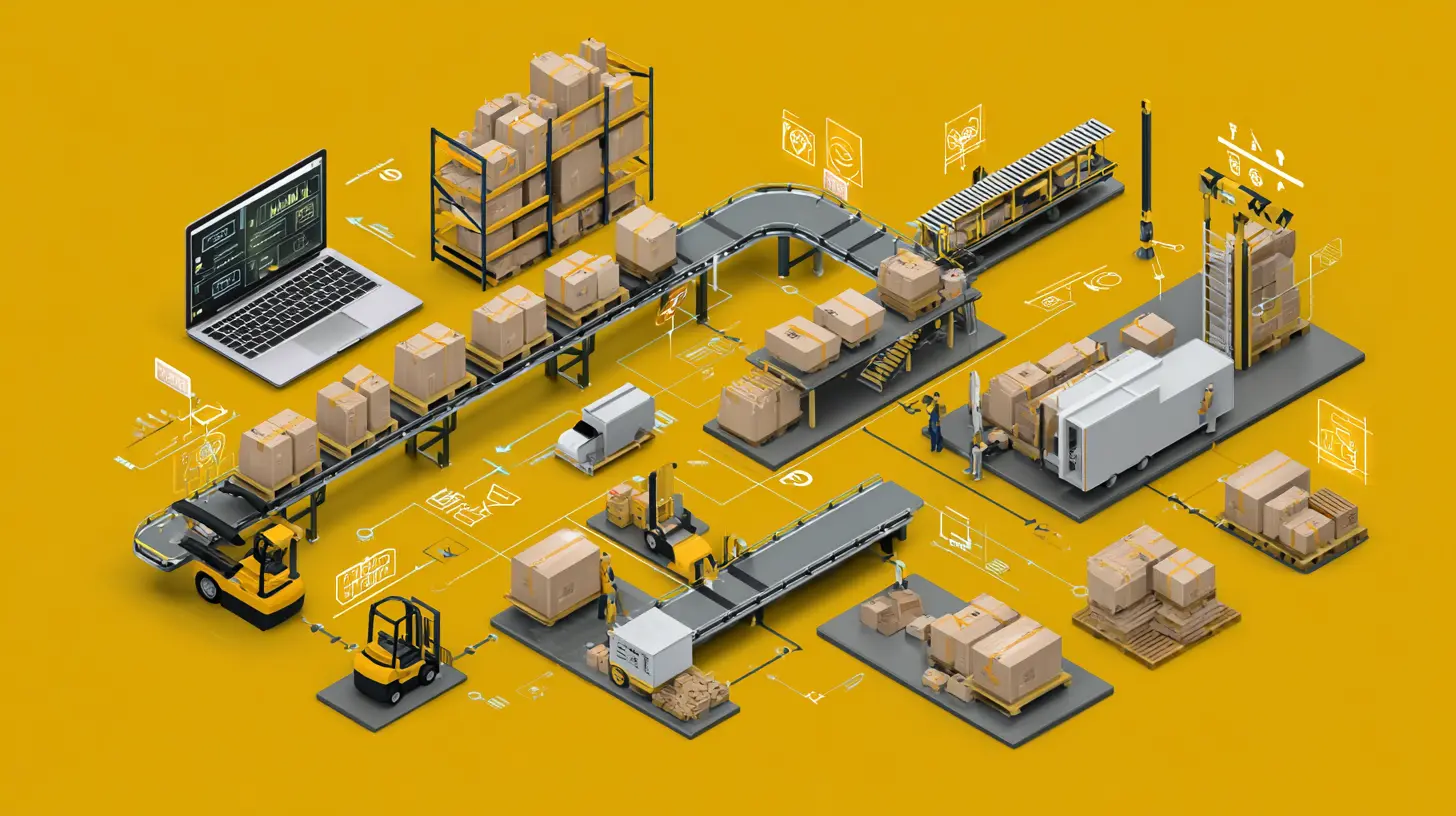
Traditional supply chains were designed like assembly lines: linear, predictable, and optimized for efficiency. You forecast demand, order raw materials, manufacture, ship, warehouse, and deliver. Each step hands off to the next. This model worked well in stable markets with abundant capacity and cheap transportation. But stability is no longer the baseline. Disruptions are the baseline.The future of tech-enabled supply chain management is about creating living systems. These are networks that behave more like biological organisms than mechanical processes. They have feedback loops. They can redistribute load when one node fails. They can sense changes in demand, weather, supplier health, and transportation capacity in near real time. They do not just execute a plan; they continuously revise the plan.
This shift requires more than new software. It requires a change in mental models. Instead of asking "What is the optimal plan?" you ask "How quickly can we re-plan when reality deviates?" The technology that enables this is not a single platform but a stack of capabilities that work together.
The Core Technology Layers
To understand what is changing, it helps to break the stack into four layers: sensing, decisioning, execution, and collaboration. Each layer has its own tools, its own maturity curve, and its own pitfalls.Sensing: The End of the Data Blind Spot
For decades, supply chain leaders made decisions based on lagging indicators. You knew where a shipment was when it was scanned at a port or a distribution center. You knew demand only after orders were placed. You knew supplier risk only after a disruption hit the news.The sensing layer is changing that. IoT sensors on containers, pallets, and vehicles provide location, temperature, humidity, and shock data. Electronic logging devices and telematics give truck-level visibility. Retail point-of-sale data, when shared with upstream partners, provides actual consumption rather than just orders. Satellite imagery and weather APIs add external context that was previously impossible to obtain.
The practical benefit is not just knowing where things are. It is knowing the condition and context of things. For example, a pharmaceutical company shipping temperature-sensitive vaccines can now see a temperature excursion in transit and decide in real time whether to discard the shipment, reroute it for repackaging, or accept it based on validated stability data. Without sensing, that decision would take days and require costly manual investigation.
However, the common mistake is thinking that more data is always better. Data collection without a clear decision framework creates noise. Companies often install sensors and build dashboards, then find that no one knows what action to take when an alert fires. The best practice is to start with a specific set of decisions you want to improve, then identify the minimum data needed to make those decisions better. Add sensing only where it changes a decision.
Decisioning: From Static Plans to Continuous Optimization
The second layer is decisioning. This includes demand forecasting, inventory optimization, production scheduling, and transportation planning. The old approach was batch processing. You ran a forecast once a week, generated a plan, and executed it. The new approach uses continuous optimization. Machine learning models ingest streaming data and re-forecast demand on an hourly or daily basis. Optimization engines rebalance inventory across the network based on current constraints, not historical averages.The key difference is not just speed. It is the ability to model uncertainty. Traditional forecasting produces a single number, like "we expect to sell 10,000 units next month." The future is probabilistic forecasting, which produces a range, like "there is an 80 percent chance sales will be between 8,000 and 12,000 units." This changes how you set safety stock. Instead of a fixed buffer, you set a service level target and let the system calculate the buffer needed to hit that target under current uncertainty.
This is a significant shift in mindset. Many planners are uncomfortable with probabilistic outputs because they want a single number to plan against. But the reality is that a single number is almost always wrong. A range, while less comfortable, is more honest and more useful. The best companies use probabilistic forecasts as a planning tool, not a prediction of truth. They run scenarios: What if a supplier shuts down for two weeks? What if a major port goes on strike? What if demand spikes by 20 percent? The system generates a plan for each scenario, and the planner chooses the most robust one.
A common misconception is that AI will replace planners. That is not happening. Instead, AI removes the repetitive, low-value work of number crunching and exception reporting, freeing planners to focus on judgment calls, supplier relationships, and unusual events. The best outcomes come from human-machine collaboration, where the machine proposes and the human disposes.
Execution: The Rise of Autonomous and Semi-Autonomous Operations
Execution is where the physical world meets the digital world. This includes warehouse automation, autonomous forklifts, robotic picking, automated guided vehicles, and increasingly, autonomous trucks and drones. The future here is not a fully dark warehouse with no humans. It is a hybrid environment where robots handle repetitive, heavy, or dangerous tasks, and humans handle exceptions, quality checks, and complex assembly.The economics of automation have improved dramatically. A robotic picking system that cost several million dollars a decade ago is now a fraction of that. But the decision to automate is not purely financial. It is also about labor availability. In many regions, warehouse and truck driver labor is scarce and aging. Automation is not just a cost play; it is a capacity play. Companies that cannot find enough workers to run a 24-hour operation may have no choice but to automate.
However, automation introduces its own risks. Systems require maintenance, software updates, and cybersecurity protection. A fully automated warehouse can come to a standstill if the warehouse management system goes down. The best practice is to design for graceful degradation. Keep manual processes as a fallback, even if they are slower. Do not put yourself in a position where a single point of failure stops the entire operation.
Collaboration: The Network Effect That Actually Matters
The fourth layer is collaboration. This is the least glamorous but often the most impactful. Supply chains are networks of independent companies, each with their own goals, systems, and data. The future of tech-enabled supply chain management depends on these companies sharing information more openly and more securely.The key technology here is not a single platform but a set of standards and data-sharing mechanisms. EDI is old but still widely used. APIs allow real-time data exchange between systems. Cloud-based control towers provide a shared view of a supply chain across multiple partners. Blockchain, despite the hype, has found limited use in mainstream supply chains, mostly for high-value goods, provenance tracking, and regulatory compliance. Its promise of a tamper-proof shared ledger is real, but the complexity and cost of onboarding partners remain significant barriers.
The real challenge in collaboration is not technical. It is trust. Companies are reluctant to share demand forecasts, inventory levels, or capacity constraints because they fear giving away negotiating leverage. The solution is not to force full transparency. It is to share data that is mutually beneficial and to use technology that protects sensitive information. For example, a retailer can share sell-through data with a supplier without revealing margins. A supplier can share production capacity without revealing cost structures. The goal is to reduce the bullwhip effect, where small demand fluctuations amplify as they move upstream, by giving upstream partners a clearer view of actual consumption.
A practical approach is to start with one pilot partnership. Choose a supplier or customer where trust is high and the potential benefit is clear. Build a shared dashboard with a small set of metrics. Measure the improvement in fill rates, lead times, or inventory levels. Use that success to expand the program. Do not try to build a massive multi-party platform from day one. That almost always fails.

The Role of Digital Twins and Simulation
One of the most promising developments in supply chain technology is the digital twin. This is a virtual replica of a physical supply chain, including factories, warehouses, transportation lanes, and inventory. The twin is connected to real-time data, so it mirrors the current state of the network. But its real value is in simulation.You can use a digital twin to test a disruption before it happens. For example, if a typhoon is forecast to hit a major port, you can simulate the impact on your network. How long will it take to reroute shipments? Which customers will be affected? What is the cost of air freight versus waiting for the port to reopen? The digital twin gives you answers in minutes, not days.
This is a significant upgrade from spreadsheet-based modeling. Spreadsheets are static and linear. Digital twins are dynamic and non-linear. They capture interactions, like how a delay in one lane creates congestion in another, or how a shortage of one component stops production of multiple products. This systemic view is exactly what supply chain leaders need when making decisions under uncertainty.
The trade-off is complexity. Building a digital twin requires clean data, domain expertise, and time. It is not a plug-and-play solution. The best approach is to start with a narrow scope, such as a single product line or one region. Prove the value, then expand. Do not try to model the entire enterprise at once. That is a recipe for a never-ending project that never delivers value.

The Data Foundation Is the Real Battleground
Every technology discussed so far depends on data. And here lies the uncomfortable truth: most supply chains have terrible data quality. Item master data is duplicated. Supplier names are inconsistent. Locations are recorded in different formats. Lead times are based on averages from years ago. Inventory counts are wrong.No amount of AI or automation can fix bad data. In fact, AI will amplify the problem. If you feed a machine learning model inconsistent data, it will produce confident but wrong forecasts. The future of tech-enabled supply chain management is therefore not just about buying new tools. It is about investing in data governance.
This is unglamorous work. It involves cleaning up item masters, standardizing supplier codes, defining data ownership, and establishing rules for data entry. But it is the single highest-return investment you can make. Companies that fix their data foundation find that even simple tools work better. Companies that skip this step find that expensive tools fail to deliver.
A practical recommendation is to assign a data steward for each critical domain: products, suppliers, locations, customers, and inventory. Give them authority to enforce standards. Set up regular data quality audits. Measure the percentage of records that meet your quality threshold. Treat data as an asset, not as a byproduct of operations.
Real-World Examples and Trade-offs
To make this concrete, consider three examples that illustrate the trade-offs.First, a global consumer goods company uses demand sensing from retail point-of-sale data. They reduced forecast error by 30 percent and cut safety stock by 20 percent. The trade-off was that they had to invest in API connections with dozens of retailers, and they had to convince those retailers to share data. It took two years to build the network. The lesson is that the technology is the easy part; the partnerships are hard.
Second, a mid-sized manufacturer implemented a warehouse automation system with autonomous mobile robots. They doubled their throughput and reduced injuries. But the system required a complete redesign of their warehouse layout and a new skillset for their maintenance team. The payback period was three years. The lesson is that automation is not a quick fix. It requires process redesign and organizational change.
Third, a logistics service provider built a control tower for its customers. The control tower integrated data from carriers, ports, and customs brokers to provide end-to-end visibility. Customers loved it, but the provider struggled to make it profitable because the cost of integrating each new customer's systems was high. The lesson is that visibility is valuable, but it is not a business model by itself. You need to tie it to outcomes like reduced detention charges, better routing, or lower inventory.
These examples highlight a common pattern. The technology works, but the value depends on organizational readiness. You need skilled people, clear processes, and willing partners. The order of operations matters. Fix data first. Build partnerships second. Automate third. If you do it in the wrong order, you will spend a lot of money and get little return.
Common Mistakes and Misconceptions
There are several mistakes that consistently derail supply chain technology initiatives.The first is chasing shiny objects. A company hears about AI and buys a tool without a clear problem to solve. The tool sits unused. The lesson is that technology should follow strategy. Start with a business pain point, like high expediting costs or poor on-time delivery. Then find the technology that addresses it.
The second mistake is underestimating change management. Implementing a new system is 20 percent technology and 80 percent people. Planners who are used to spreadsheets will resist a new planning system. Warehouse workers will resist new picking devices. Suppliers will resist new data-sharing requirements. You need to invest in training, communication, and incentives. Show people how the new system makes their job easier, not harder.
The third mistake is expecting perfection. No forecast is perfect. No plan survives contact with reality. The goal is not to eliminate uncertainty but to manage it. The best companies are comfortable with probabilistic thinking and scenario planning. They do not wait for certainty because certainty never comes.
The fourth misconception is that technology is a substitute for relationships. In a crisis, you call your suppliers and customers. You negotiate, you compromise, you help each other. No algorithm can replace that. Technology should support relationships, not replace them. The best supply chains are those where the technology gives people better information, and the people use that information to build trust.
The Human Element
It would be a mistake to write an article about the future of supply chain technology without addressing the human element. The workforce is aging. The skills required are changing. A warehouse manager in 2030 will need to understand robotics, data analytics, and exception handling. A supply chain planner will need to understand machine learning, probability, and business strategy.The companies that succeed will be those that invest in their people. This means not just training but also career paths. A forklift driver should be able to become a robot operator. A planner should be able to become a data scientist. The future is not about fewer people. It is about different people with different skills.
There is also a cultural dimension. Supply chain professionals have historically been rewarded for following the plan. The future rewards those who can adapt the plan. This requires psychological safety. People need to be able to say "the forecast was wrong" without being blamed. They need to be able to propose a radical rerouting plan without fear of retribution. Technology enables adaptation, but culture determines whether adaptation actually happens.
Recommendations for Getting Started
If you are a supply chain leader, where should you start? The answer depends on your current state, but there are some universal steps.First, conduct a data audit. Know what data you have, where it lives, how clean it is, and who owns it. This is the foundation for everything else.
Second, identify your top three pain points. They might be excess inventory, poor on-time delivery, high freight costs, or supplier risk. Pick one and focus on it. Do not try to solve everything at once.
Third, build a small cross-functional team. Include IT, operations, finance, and a key supplier or customer. Give them a clear mandate and a timeline. Let them choose the technology, not the other way around.
Fourth, start with a pilot. Choose a product line, a region, or a lane. Implement the technology on a small scale. Measure the results against a baseline. Learn from the mistakes. Then scale.
Fifth, invest in change management from day one. Communicate early and often. Train people before you implement, not after. Celebrate early wins. Be honest about challenges.
Finally, be patient. This is not a one-year project. It is a multi-year transformation. The companies that see real results are those that stay the course, iterate, and learn.
The Road Ahead
The future of tech-enabled supply chain management is not a single destination. It is a continuous journey of adaptation. The technologies described in this article are real and available today, but their value depends on how they are used. The companies that will thrive are those that combine these tools with clear strategy, strong data, and capable people.There will be new disruptions, new technologies, and new challenges. The supply chain of the future will look different from today, but the fundamental principles will remain. Sense early, decide wisely, execute flexibly, and collaborate openly. Technology is the enabler. People are the differentiator. The rest is just logistics.
all images in this post were generated using AI tools
Category:
Tech For BusinessAuthor:

Reese McQuillan